

Solar Buybacks and Net Metering: Understanding Your Options
When investing in solar energy for your home, understanding solar buybacks and net metering is crucial. Here’s a breakdown of how it works and what you should consider:
What is Net Metering?
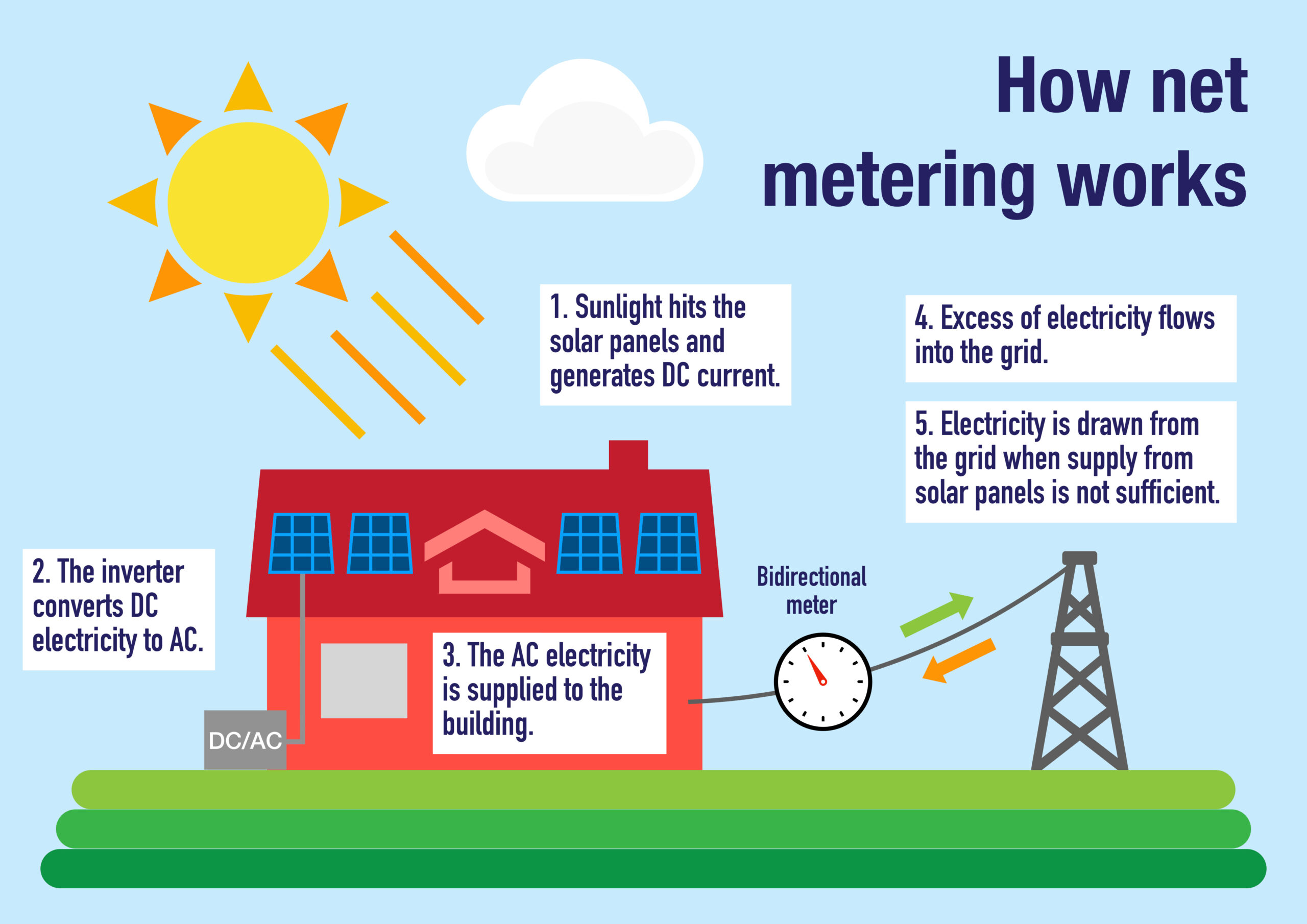
Net metering is a billing mechanism that allows homeowners with solar panels to sell excess electricity generated by their solar system back to the grid. Net metering works a lot like a virtual savings account for your home’s energy. During the day, your solar panels usually create more electricity than you use, and this extra energy goes into the power grid. Think of it as depositing energy into your “energy savings account.” Then, at night when your panels aren’t producing electricity, you can draw energy back from this account to power your home.
If you store $50 worth of electricity in your “savings” (Credits), ideally, you’d want your utility company to let you withdraw that same $50 worth later. This is why it’s crucial to have the right net metering “buyback plan” – if you’re selling electricity to the grid at 15 cents per kWh, it’s best if your utility buys it back from you at the same 15 cents per kWh, maximizing your savings. Below is a good graphic on how this works, and further down we’ll break down the solar net metering scenarios to consider.
Scenario 1: Ideal 1:1 Net Metering
In the ideal scenario, your utility company buys electricity from you at the same rate they sell it to you. This means if your solar panels produce enough excess power during the day, you can generate enough energy “credits” to cover your electricity consumption at night. The result? Your electricity bill could be in the low $15/month or significantly reduced each month. It’s rare that electricity bills can get down to $0/Month. In Texas, if you’re connected to the grid, most providers charge you a baseline on the monthly basis. Every provider will have different baseline fees for this. But in a 1:1 Buyback program – your energy will always save you money.
Scenario 2: Partial Offset (Insufficient Credit Generation)
In this scenario, your solar panels generate enough electricity during the day, but you don’t produce sufficient excess to build substantial credits. Consequently, you’ll still need to purchase some electricity from your utility at night. Although you might not achieve a zero-dollar bill, you’ll still experience significant savings compared to a traditional electricity bill.
Scenario 3: Unequal Rates for Buyback and Purchase
Some utility companies buy your excess electricity at a lower rate than they charge when selling electricity to you – often around half or even less. This means that even if you generate excess power during the day, the credits are valued lower. As a result, you’ll always need grid electricity at night, making it impossible to achieve substantial savings through net metering alone.
Scenario 4: Adding a Solar Battery Storage System
Incorporating battery storage into your solar setup is the absolute best strategy to get the most out of your solar investment. Think of your battery as your personal energy bank: during the day, you save extra electricity generated by your panels directly into the battery. At night, instead of buying electricity back from the grid, you simply use the energy you’ve already stored. This approach lets you dramatically cut – or even completely eliminate – your reliance on the grid after sunset, helping you achieve maximum savings.
Additionally, a battery provides a valuable backup power source, keeping your home running during emergencies or power outages, ensuring peace of mind and continuous comfort.
What Should You Look For?
When evaluating solar and net metering options, consider:
- Rate Policies: Verify if your utility company offers a 1:1 buyback or different rates for selling and purchasing.
- Battery Storage Options: Assess the cost-benefit of incorporating batteries to maximize your solar energy usage.
- Contract Terms: Understand any contractual obligations, changes to future rates, and duration of guaranteed buyback rates.
By thoroughly evaluating these factors, you can choose the optimal solar setup and net metering strategy that best fits your energy consumption and financial goals. If you need help with this, check out our buyback program page here: Solar Buyback